Tuesday, August 2, 2011

THE GRAMMAR of ANARACHY


As I Feel It

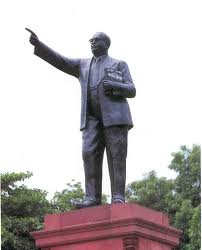
I wrote in my Blog on ‘ Satyagraha and Democracy’ and also on ‘ The Corruption Debate ’ with reference to the agitation of Anna Hazare and the Civil Society on the Lokpal and corruption and Yoga Guru Baba Ramdev on black money and corruption. Much has happened very fast in intervening months. There are a few lessons to be learnt from the prophetic warnings of Dr. B.R. Ambedkar, father of the Indian constitution. He said in the Constituent Assembly on November 1949:
Quote
We must hold fast to constitutional methods of achieving our social and economic objectives. It means we must abandon the bloody methods of revolution. It means that we must abandon the method of civil disobedience, non-cooperation and satyagraha. When there was no way left for constitutional methods for achieving economic and social objectives, there was a great deal of justification for unconstitutional methods. But where constitutional methods are open, there can be no justification for these unconstitutional methods. These methods are nothing but the Grammar of Anarchy and the sooner they are abandoned, the better for us.
Unquote
We all know the aftermath of Baba Ramdev’s agitation at the Ramlila grounds. Baba Ramdev is in trouble. His close associate Balakrishan is on the run. I think Baba discredited himself and the message on black money. He tried to assume that he was more powerful than the duly established Government and the constitutional set up of the country. Nobody shall undermine the importance of the issue of black money. But the process to address the problem shall have legal and constitutional support. Now Baba Ramdev is busy in proving that the money and property he amassed over the years is white and legal. I think it would be difficult. It would be advisable for the Baba to read and consider Dr. Ambedkar’s reference to the grammar of anarchy in his thought provoking speech.
Coming to the agitation of Anna Hazare and the so called civil society, it is going to be, to my mind, yet another disaster. Anna Hazare is a respected Gandhian. The members of the civil society like Kiran Bedi, Swami Agnivesh, Arvind Kejriwal, Santosh Hegde who are the supporters and instigators of the agitation are also well placed intellectuals. The cause and issue of corruption for which they are agitating is also important and topical. They made their point and the Government of day fell in line. The joint drafting committee on the Lokpal bill was constituted. The duly elected Government has agreed to introduce a bill in the Parliament on the Lokpal. Anna Hazare and the civil society are not satisfied with the provisions of the said bill. There is no problem. They may still have differences with the authorities. But to sort out these differences now, they are expected to go to the Parliament and not to the Jantar Mantar. They shall speak and convince the political parties and the MPs and get their wishes included in the Lokpal Bill. They make the Government agree or if not, may consider defeating the Government on the floor of the house. Thy may even consider amending the constitution to accommodate their wishes not only with regard to the Lokpal but also any other issue. The constitution provides for such arrangements. Anything outside this would amount to subscribing to the grammar of anarchy which the framers of the constitution spelled out. Let us hope that the saner sense prevails and these issues are addressed through constitutional means. Corruption needs to be tacked head on. There are not two opinions about this. But how it could be done ?Certainly by not shouting from the top but by faithfully and diligently working for the empowerment of the society at large though constitutional ways and means. I reminded of an Urdu couplet of Dr. Iqbal:
मस्जिद तो बना दी सव भर में, इमां की हिरार्त वालों ने,
मन अपना पुराना पापी है बरसों से नमाज़ी बन सका !

Monday, August 1, 2011

THE AARAKSHAN CONTROVERSY - A point of view


I have read with interest the controversy on the forthcoming movie AARAKSHAN. The issue, to me, seems to be unnecessary and uncalled for. The movie produced by Prakash Jha, renowned movie personality, is yet to be released. The controversy that the movie is against the dalits is based on hearsay. The public does know the contents and the message, if any, of the movie. I read some months before that the lead actor in the movie Saif Ali Khan was harassed and threatened by the concerned. I read the other day that some forum has been made in Jalandhar to oppose the movie. Today, I read that P.L. Punia, Member of Parliament and Chairman of the Scheduled Caste Commission have desired to see the movie before it is released. The producer Prakash Jha and the Censor Board headed by Leela Samson have not agreed to do so. On intervention by the Ministry of Information, a special screening of the movie was arranged by the Censor Board for a 9 member Panel (5 members of the panel belonged to dalit community) constituted for the purpose. They did not find any objectionable content and intension in the movie. The movie is scheduled to be released on August 12.
I have not seen the movie. Most of the so called activists who have apprehensions about the movie have also not seen it either. What is the controversy then? Is it inferiority complex? Is it fear? Is it ignorance? Is it exploitation or blackmail by the vested interests? We are living in a democracy and shall not be afraid of debate and discussion. Let people speak their mind in a civilized way. The dalits shall prepare themselves to meet them make their point, if there is any. Democracy also provides them the power of vote. Defeat the adversary, if required, at the Hastings. Dr. Ambedkar. became the Chairman of the Drafting Committee of the Constituent Assembly by his own right. Jagjivan Ram could not become the Prime Minister in spite of the fact that he was the most competent and eligible to hold the position. Mayawati is holding the coveted position of the Chief Minister of Uttar Pradesh for the fourth time on the basis of her own strength and ability. Let us shed the fear and get ready for the fight by democratic means in the parliament, legislatures and the society at large. I heard one of the songs of the movie AARAKSHAN which goes something like this:

जरा पंख तो खोलो फिर उड़ान देखना; जरा मौका तो दो फिर आस्मां देखना !

Thursday, June 9, 2011

SWAMI GURDIP GIRI of PATHANKOT


I wanted to write about Swami Gurdip Giri, Head of the Swami Jagat Giri Maharaj of Pathankot (Punjab) just to pay my respect to him and in recognition of the good work the Dera is doing, under the stewardship of Swami Gurdip Giri., in and around Pathankot and Jammu ( J & K ) some districts of Himachal Pradesh. I also personally know that Swami Gurdip Giri is not only popular and revered in Jalandhar and many areas of Punjab but also abroad particularly among the dalits and followers of the great Guru Ravidass. The immediate motivation or provocation to do so now is the news item in the daily Tribune “Good Samaritan providing free education to kids of ‘poor’ bootleggers” appeared on May 31. Anyway, it is better late than never. Swami Gurdip Giri certainly deserves full appreciation and support in this noble task.


I met Swami Gurdip Giri in the summer of 1999 at our small flat in Kalkaji, New Delhi. At that time, I was the Director of Central Asia Division in the Ministry of External Affairs. Swamiji was to visit the UK and required visa. Community activist Ram Dhan of Jalandhar who was known to me accompanied Swamiji. My brother Kishan also spoke and advised me to help swamiji in whatever way I could as he enjoyed a large following and goodwill in the Sialkot community in the Bastis of Jalandhar. They stayed with us. I dropped them at the UK High Commission with my visiting card meant for the visa officer. Fortunately, Swamji got the visa the same day. I was happy and Swamiji was happy. These are some of the small details of our first meeting. I was fully impressed by Swami Gurdip Giri particularly by his unarming simplicity. He earned reverence rather than commanding it. Unlike many spiritual personalities, who except respect, I found Swamiji just natural and simple. But he commanded an aura inviting respect and regard. He beared with me, particularly my not so religious or spiritual orientation and some of the rituals and mannerism attached to such occasions. I think he felt my genuine respect and regard for him. I also fully recognized his high acceptance and position in the society. Swamiji came back from his maiden visit to the UK and again blessed us and stayed with us along with some his close followers who came to receive him. We were happy to further cement our connection and association with Swamiji. Swami Gurdip Giri’s life and mission exactly conforms to the mission and philosophy of the Dera Jagat Giri based on the teachings of Guru Ravidass, as stipulated in the website of the Dera:

Dera Swami Jagat Giri ji Maharaj was founded to spread the mission and follow the teachings of Guru Ravidas ji Maharaj to :-

a) Convert the world into “Begampura” (place free from sorrows & worries) in an environment full of compassion care and commitment.
Begampura Sehar Ko Nawo
Dukh Andoh Nahi Tihi Thauw
b) Provide the best education to all, especially deprived sections of society. For this purpose four schools are running under the expert direction of Dera Swami Jagat Giri Charitable Trust, Pathankot. : -
Madho Avidhya Hit Kien
Vivek Deep Malin
c) Make the society free from Drugs, liquor and social evils :-
Sursari Salal Krit Baruni Rey
Sant Jan Karat Nahi Paan
d) Unite all under the religious flag of Dera Swami Jagat Giri and under the leadership of Swami Gurdip Giriji Maharaj.
Satsangati Mili Rahio Madhau
Jaise Madhup Makhira

The write up ‘Good Samaritan- Providing free education to kids of ‘poor’ bootleggers’ fully endorse the good work of the Dera and his current mentor Swami Gurdip. I join the applaud.


In spite of my diplomatic assignments abroad, I could maintain my connection with Swami Gurdip Giri through my brother Kishan and our other relations in the community who were close to Swamiji. It is a matter of satisfaction for me. I am told that Samiji is a well respected personality not only in the dalit and other poor sections of the society but also the society at large. His satsang sittings are hugely liked and popular by the common man and rightly so.
My next meeting with Swami Gurdip Giri was at the marriage of my daughter Vaishali in December, 2001. I was not physically fit to be active due some serious sickness. Al the arrangements were done by my brothers Kishan and Pammi. Swamiji was also invited to the marriage. I am happy to note with gratitude that he blessed my daughter with his visit to our home at Bootan Mandi, Jalandhar on the eve of the marriage. I and my wife Vidya and obviously my brothers were humbled by the gracious gesture. I distinctly remember that Swami is spoke to my daughter and invoking the sabad of the guruvani of Guru Ravidass “sh kI swr suhwgin jwnY ] qij AiBmwnu suK rlIAw mwnY ]” to bless and advise her. I was further impressed by his sermon and grace. I had an opportunity to visit Swamiji at his Dera in Pathankot along with my wife who was very keen to pay our respects to Swamiji. My brothers who arranged the meeting and the visit also accompanied us. Swamiji was very kind to us. He very kindly and graciously blessed us and honored me with a ‘Saropa’in the congregation. We were further humbled. My mother died in 2006. I came for the final Ardas/Bhog ceremony from Prague where I was posted. On arrival, my brothers told me that Sami Gurdip Giri has been requested to bless us on the occasion and address the solemn congregation. I was happy. Swamiji honored and blessed us. In the process, he remained a source of inspiration and Gods grace on us.
Swami Gurdip Giri is doing tremendous work for the spiritual, educational and social upliftment of the poor masses and weaker sections of the society as rightly brought out in the said item in the Tribune without any fanfare. We all shall support him in his endeavors and wish him God speed.

Saturday, May 28, 2011

SATYAGRAHA & DEMOCRACY


FOOD for THOUGHT


Mahatma Gandhi adopted ‘Satyagraha’ as the modus operandi of his political and social action against the British rulers in the fight for independence and also sometimes political and communal causes like the ‘fast unto death’ against the ‘communal award’ resulting in the Poona Pact in 1932 with Dr. B.R. Ambedkar and ‘Satyagraha’ at the time of partition of India in 1947 and so on. India got its independence on August 15, 1947. Mahatma Gandhi was assassinated by Nathu Ram Godse, a fanatic and fundamentalist. India adopted its constitution and became a Republic on January 26, 1950. The whole scenario got changed giving way to democracy as against civil disobedience, non-cooperation or ‘Satyagraha’.Dr. B.R. Ambedkar, the father of the Indian constitution, referred the change in his last speech in the Constituent Assembly in November 1949 and said

“If we wish to maintain democracy not merely in form, but also in fac
t, what must we do? The first thing in my judgment we must do is to hold fast to constitutional methods of achieving our social and economic objectives. It means we must abandon the bloody methods of revolution. It means that we must abandon the method of civil disobedience, non-cooperation and Satyagraha. When there was no way left for constitutional methods for achieving economic and social objectives, there was a great deal of justification for unconstitutional methods. But where constitutional methods are open, there can be no justification for these unconstitutional methods. These methods are nothing but the Grammar of Anarchy and the sooner they are abandoned, the better for us”.

The speech of Ambedkar is the food for thought in the wake of growing tendencies of ‘Satyagraha’ over the constitutional methods as shrined and stipulated in the law. Anna Hazare did it recently and felt vindicated in the matters relating to corruption. Swami Ramdev is set to repeat the methods of ‘Satyagraha’ for the issues of corruption and black money. The outcome is to be watched. The Government, it seems is worried, as Swami Ramdev enjoys huge following. Some more food for thought is the aftermath of Jaiprakash Narain’s ‘ Satyagraha ‘ in early 1970s resulting in Emergency imposed by the then Government of Indira Gandhi. I think it is the ‘Grammar of Anarchy ‘which Dr. Ambedkar talked about in his thought provoking speech in the Constituent Assembly.

Thursday, May 26, 2011

THE CORRUPTION DEBATE – A POINT OF VIEW


The issue of corruption is in the news every day. It will remain so in the years to come as it is an important issue which not only affects our daily lives but also the overall health of the country and the society. Bribes are a fact of life in India. The Transparency International ranked India at 87 out of 178 countries in its Corruption Perception Index in 2010. Corruption is not a new issue but of late it has generated somewhat additional focus in the wake of some huge scams and corruption cases which have come to light in recent times. Some of the activists of the so called ‘ civil society ‘ like Kiran Bedi, Shanti Bhusan and social and community activist like Anna Hazare and Swami Ramdev have thrown their weight behind the corruption debate and the questions pertaining to its handling and eradication. The Government has been made to succumb to the demands of fortifying and strengthening the official and legal frame work including statutory and constitutional provisions. It is intended to bring in the desired checks through the system of Ombudsmen, as in some European countries, to control corruption. The Lokpal Bill is being drafted which will be presented in the Parliament in the coming months. Some of the provisions of the draft Bill are appearing in the media. The judiciary is also getting pro-active in addressing the issues related to corruption. The Government and the Opposition is getting vocal as it is a political compulsion for them to speak. The Aam Aadmi (common man) is getting interested but confused. Not only it is a contentious issue but also a long drawn process which requires constitutional amendment.

Notwithstanding the well placed concern on the issue of corruption which certainly needs to be addressed and tackled head on, there is an urgent need to see and examine the issue from historical, constitutional and practical perspective. Undue gratification (corruption or bribe) has been one of the tenants of governance (political/diplomatic expediency) right from the Kautilya (Chanakya) times under the dictum of SAM, DAM, DAND, BHED. It states the obvious. Some discount, in view of the human instincts, is due while making the law and in the process o its implementation. It does not mean that corruption or bribery has to be allowed or legalized. The next aspect is the law or the constitutional provisions... It is very easy to say that the relevant laws are not enough to deal with a particular issue. But, to my mind, the realities are different. Our constitution is a well written and very wisely made instrument. It has already stood the test of time. Prime Minister Indira Gandhi tried to re-enforce or change some of the provisions. The Swaran Singh Committee suggested the changes and some of them were incorporated in the constitution, of course by the due procedure of the law. Even the nicely worded poetic Preamble of the constitution was amended by adding the words ‘democratic, secular, socialist’. I think it did not make any difference. India was both democratic socialist and secular state even before the amendment and it will remain so as long as the spirit of the constitution remains and prevails. Prime Minister Atal Bihari Vajpayee also appointed a constitution review committee. The Committee could not do anything worthwhile. I am reminded of Dr. B.R. Ambedkar who asserted in the Constituent Assembly “As much defense as could be offered to the constitution has been offered by my friends Sir Alladi Krishnaswami Ayyar and Mr... T.T. Krishnamachari. I shall not therefore enter into the merits of the Constitution. Because I feel, however good a Constitution may be, it is sure to turn out bad because those who are called to work it, happen to be a bad lot. However bad a Constitution may be, it may turn out to be good if those who are called to work it, happen to be a good lot. The working of a Constitution does not depend wholly upon the nature of the Constitution. The Constitution can provide only the organs of State such as the Legislature, the Executive and the Judiciary. The factors on which the working of those organs of the State depends are the people and the political parties they will set up as their instruments to carry out their wishes and their politics. Who can say how the people of India and their purposes or will they prefer revolutionary methods of achieving them? If they adopt the revolutionary methods, however good the Constitution may be, it requires no prophet to say that it will fail. It is, therefore, futile to pass any judgment upon the Constitution without reference to the part which the people and their parties are likely to play”. I think necessary legal framework is already in place which shall meet the emerging scenario. There is no need to make unnecessary and excessive laws which could not be implemented. The noose shall be tight against the corrupt politicians and beaurocrates. There shall not be two opinions on this. But the question remains that telecom scam; adarsh scam etc. and the likes of Radia and Hasan do not affect and harm the common man directly. The common man is more harassed and tortured by the police constables, electricity, water, telephone, ration card inspectors. How do we propose to control that? They make some additional bucks daily. They are not rich. How one does proposes to attach or confiscate their properties. Corruption at high levels prevails in other countries too but generally the common man is not subjected to these problems on day to day basis. It does not mean that one shall not be flexible but more rules and regulations have not served the purpose. The mind set needs to be changed. The menace of money power in the elections, increasing criminal elements in politics need to be checked. The judiciary needs to be strengthened and made efficient. It is said that justice delayed is justice denied. The legal process needs to be geared up to address corruption particularly the small corruption which is faced by the poor and common citizen.
The existing institutions and mechanism need to be streamlined and strengthened. The constitutional and statutory authorities like the Comptroller and Audit General, the Election Commission, the Vigilance Commission, the National Human Rights Commission, the Union Public Service Commission, and so on. The newly made and introduced provisions of the RTI Act, the RTE Act should be fully implemented. The ‘revolutionary methods ‘referred to by Dr. Ambedkar would be a danger for the democratic edifice of our polity and establishment. I hope the well meaning people like Anna Hazare and Swami Ramdev and the leaders and activists of the ‘civil society’ do not, knowing or unknowingly, would be interested in, as it is said, ‘ eating and not only counting the mangoes’. I reminded of Dr. Iqbal who wrote beautifully:

मस्जिद तो बना दी सव भर में, इमां की हरारत वालों ने;
मन अपना पुराना पापी है बरसों से नमाज़ी बन सका !

Monday, May 23, 2011

SANT RAMANAND – A TRIBUTE


Satsangat mil rahee-ai maaDha-o jaisay maDhup makheeraa.


Today, May 25, is the 2nd death anniversary of Sant Ramanand of Dera Sachkhandballan of Jalandhar (Punjab). I had written about Sant Ramanand in this Blog before and also about his tragic death in Vienna (Austria) in the aftermath of a gruesome shoot out in Guru Ravidass Gurudwara on May 24, 2009 by some fanatics and fundamentalists. It was a heinous crime not only against the communal peace and tranquility of the State of Punjab and the Indian society at large but also against humanity and also against the very tenants and lofty ideals of the great Gurus. Sant Ramanad, to my mind, was himself a virtual Sikh who believed not only in the mission and philosophy of the great Sikh Gurus including Guru Granth Saheb but also preached and imparted the knowledge of the Guruwani to the masses through Satsang for the spiritual well-being of the followers. Sant Ramanand was a spiritual Guru, keeping with the great Saints of the Dera Schkhandballan. The Dera has, and rightly so, become the nerve centre of the social and spiritual upliftment of the masses of the region and more so of the dalits and followers of the great Guru Ravidass. Sant Ramanand’s contribution in the process was great. His whole hearted involvement in the social, educational and spiritual emancipation of the poor masses belonging to the weaker sections of the society will be remembered in the years to come. Sant Ramanand was a harbinger of awakening and awareness among the dalits in the true spirit of Guru Gobind Singh’s philosophy “Soora so pehchaniye jo lade deen ke hait “He taught to the dalits and under privileged the Mantra of assertion for their rights. Perhaps these very things which were good for the establishment of an egalitarian society as the Sikh Gurus desired did not go well with the “Thekedars” of the society. Santa Ramanand paid the price by giving his life as he knew that the Azadi and Righteousness would be safe guarded only through fearless conduct and sacrifice. He was acting in accordance with the teachings of Guru Nanak, Guru Gobind, Guru Granth and also Guru Ravidass, the flag bearer of equality, fraternity and justice.

Sant Ramanand’s conduct in his life time and his contribution and sacrifice for the overall well being and welfare of the community and the society at large will be remembered and appreciated forever. But there are a few lessons which are to be learnt and a few questions which would require to be answered, if we are really want that the sacrifice of Sant Ramanand is not lost and is wasted. The lessons to be learnt are, to my mind – i) greater vigilance and sense of security is needed as the mission and programme of the community gains strength ii) the agenda of the community and that of the leaders may not be high-jacked by the self cantered and self appointed leaders who are hanging in and around the ‘ canters of awakening and action ‘ like the the spiritual deras iii) the inherent and resultant energy of the community which got amply demonstrated in the aftermath of the Vienna incident and the martyrdom of Sant Ramanand needs to be directed and channelized before it goes berserk and sense of fatigue sets in. iv) there is an urgent need to create and establish ‘think tanks’ which may provide much needed policy inputs and options before the community to avoid vacuum of direction and leadership which was visible in the wake of crisis after the tragic happenings of Vienna in May, 2009. Similarly, some questions which need to address urgently and immediately – i) what should be done to save and safe guard the much needed unity, particularly to defeat the dirty designs of the opponents who are much stronger and organized? ii) the questions related to cooperation or confrontation, which is likely, about the new sect/religion and of the vani/granth need to addressed keeping in view the overall harmony and peace in the society iii) the questions of spiritual, ethnic, social, legal, constitutional force and sanctions for the creation and propagation of the new sect/religion in the background of the struggle of Dr. B.R. Ambedkar and Babu Mangu Ram in the contemporary times. I am a humble and ordinary member of the community and a follower of Guru Ravidass and Dr. B.R. Ambedkar. The views expressed in this write up are personal and are free-wheeling which may serve as ‘food for thought ‘.

If we are able to consider and think on some of the issues raised in the preceding line, I would think that it is my sincere tribute to the memory of Sant Ramanad with whom I had the opportunity to interact and discuss some of these concerns in one of my meetings with him in Vienna itself in February 2008.

Tuesday, May 17, 2011

GREETINGS ON THE BUDDHA PURNIMA


Today is Buddha Purnima - the birth anniversary of Gautma the Buddha. It is day to be celebrated not only by the Buddhists all over the world but by all peace-loving and society oriented people. I am one among the lot. I take this opportunity to greet everyone and wish them peace and prosperity in the years to come.
India has a special meaning and significance for the Buddha and his teachings. India is blessed to make and give Prince Gautma as the Buddha and his mission and teachings to us to lead a meaningful life. These teaching are as potent and relevant today as these were before. It is a matter of great satisfaction that, in the contemporary times, Dr. B.R. Ambedkar revived Buddhism in India as the teachings of Mahatma Buddha are increasingly becoming more relevant in these days of tension and strife in the society. It is all the more gratifying that the imprint of Lord Buddha is clearly visible and available on the constitution of India and India's state insignia like the flag (dhamma chakra) and the natational emblem ( lions of the sarnath stupa). The credit goes to Dr. Ambedkar and Pandit Jawaharlal Nehru for reinstalling the glory of India by bringing back the touch of Buddhism to the land of its origin. Dr. Ambedkar not only embraced Buddhism himself but professed in no uncertain terms ' My social philosophy may said to be enshrined in three words: Liberty, Equality and Fraternity. I have derived these from the teachings of my master, the Buddha'. My personal touch and connection with the Buddha and the Buddha Purnima is simple - i) my daughter Vaishali was born on the Buddha Purnima Day. Her marriage ceremony also had an Buddhist input in the welcome ceremony of the Barat at the lobby of the President Hotel in Jalandhar conduct by a renowned Japanese Buddhist priest (Bhikhu ) D.S. Uchida. ii) my small house is located in the IFS Villas in Gautam Buddha Nagar ( Greater Noida ) in UP ( Hon'ble Chief Minister of UP Kumari Mayawat being a follower of Ambedkar also professes to be a Buddhist by mind and thinking and has done some good work in bringing back the legacy of Lord Buddha) iii) I am obliquely connected with the Buddha Vihara at my native place Bootan Mandi in Jalandhar. Infact, I was invited to be the lead speaker at todays ( May 17) function at the Vihara in Jalandhar but, unfortunately, I could not make it.
Let me conclude by recalling the three important aspects of Lord Buddha's teaching i.e. i) Lord take me to the embrace of the learned ( Buddha ) ii) Lord make me profess right conduct (Dhamma) and iii) Lord make me to live a social life in good company ( Sangha). This is basic mantra for ordinary people like us to be followed to live in peace and harmony. May Lard Buddha bless us.