Friday, August 20, 2010

Some of My Fellow BootanMandians

From the Memory Lane

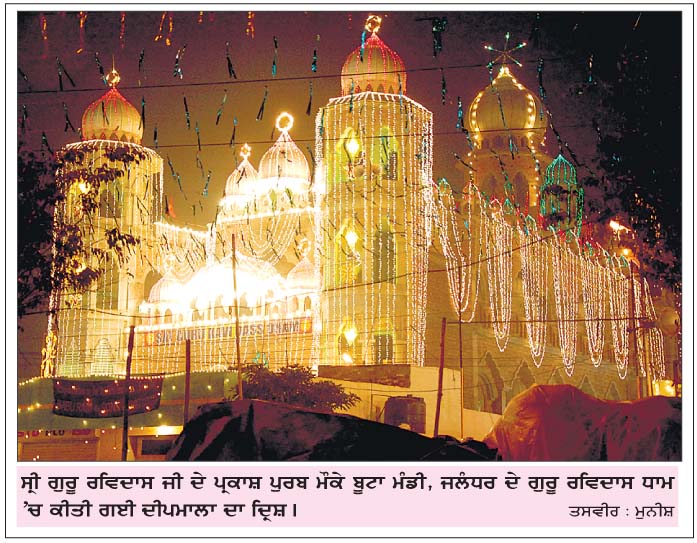
Bootan Mandi is my native place in Jalandhar district of Punjab. It is situated on Nakodar Road, now renamed as Dr. Ambedkar Marg, near the posh Teg Bahadur Nagar on one side and other good locality Model House on the other side.Guru Ravidass Chowk and the Guru Ravidass Dham are the current landmarks of Bootan Mandi besides Bawa Skin Company and Pioneer Sports as the old business houses. The 99% or may be 100 % residents of the locality are dalits (mainly Chamars) who are basically engaged in leather business. They are doing well and are economically better as compared to their dalit brethren in the region. The scene is changing fast. The traditional aspect of the business has undergone change and the younger generation of the business people perhaps could not sense and prepare themselves for the new requirements. The traditional leather business is difficult to sustain though some old business houses are trying to adjust and continue. It is quite curious to mention that the word ' Seth ' is suffixed to the names of most of the well to do people of Bootan Mandi as a honorific. Sometimes, it seems odd and self gratifying.

Bootan Mandi, because of its economic and commercial position, remained the nerve centre of dalit politics and social struggle for almost 7-8 decades. Guru Ravidass Jayanti celebrations is celebrated with gaiety and enthusiasm. The annual event by now has taken the form of a big Mela and festive occasion in the city of Jalandhar. With this background, I come to the theme of this blog i.e. some famous and worthy sons of Bootan Mandi.

The first name which comes to my mind is of Seth Kishan Dass. I saw him in Bootan Mandi when he was already a senior citizen. I did not have the chance to meet and speak to him. I heard a lot about him from my father. Seth Kishan Dass was a politician and a social activist. He was a close associate of Dr. B.R. Ambedkar. His business base was in Calcutta ( now Kolkatta )and as such he played an important role in getting Dr. Ambedkar elected to the Constituent Assembly from Bengal. Had Dr. Ambedkar not come to the Constituent Assembly, the contemporary history of India and the story of the dalits would have been different. Sethji was a Member of the Legislative Assembly of the undivided Punjab before the partition of India. Seth Kishan Dass was instrumental in bring Dr. Ambedkar to Punjab and hosting him at his residence at Bootan Mandi in 1952. My father told me that the public meeting at Bootan Mandi to welcome Ambedkar was the turning point in the dalit politics of Punjab. Dr. Ambedkar's thought provoking lecture on democracy at the D.A.V. College Jalandhar , my alma mater, during that visit is as relevant today as it was in the early years of India's tryst with democracy. Seth Kishan Dass and his family continued to be active in politics. Following the foot steps of Sethji, his grand son Shri Avinash Chander is a Member of the Punjab Legislative Assembly from the Kartarpur constituency and is currently the Chief Parliamentary Secretary in the Government of Punjab. The family is one of prominent families of Bootan Mandi engaged in leather business. I understand, by now, the family has a fair share in the services also. The younger lot, two of grand daughters of Seth Kishan Dass ( daughter and daughter in law of Seth Mool Raj ) are the Punjab Civil Service (PCS) officers and are holding important and responsible positions in the Punjab Government. Pritam Ramdasspuri, a famous and erudite Urdu poet, who was also a worthy son of Bootan Mandi, also belonged to the same family and was one of the nephews of Seth Kishan Dass. Bootan Mandi shall be proud of Seth Kishan Dass and the family. Personally, I feel that Seth Kishan Dass and his family should have done and contributed more for the educational upliftment of the society which is still a crying need.

Seth Khushi Ram comes next. I understand his father Seth Sunder Dass was an honourable man with a good social standing. Seth Khushi Ram was an active politician and social activist. He belonged to the Congress Party and aligned himself with Babu Jagjivan Ram as opposed to Seth Kishan Dass who was an Ambedkarite. It appears to me that Seth Khushi Ram loved to be near power or would be power. I remember, as a youngman, the leaders like Partap Singh Kairon,
Prithvi Singh Azad, Master Gurbanta Singh, Sardar Swaran Singh and many more would come to Seth Khushi Ram's Chubara ( a double storey building) often touring their tour of the area. Seth Khushi Ram was in the forefront to start and run the Guru Ravidass Primary School in Bootan Mandi in the Gurudawara. I also had my primary education in that school. Seth Khushi Ram remained the Vice Chairman of the Jalandhar Municipal Council and also, if my memory does not fail me, one of the Vice Presidents of the Congress Party in Punjab. His sons did not follow him in politics and social life and are engaged in leather business in Bootan Mandi. Seth Khushi Ram's contribution and role in making and keeping Bootan Mandi in the scheme of things of the dalits of the region was substantial.

(to continue...)

Wednesday, August 18, 2010

SOME FOOD for THOUGHT


Without Comment -

1) Somebody wrote in the FACEBOOK on August 18, 2010

QUOTE

Love All - Whenever you see love coming; welcome it; open your arms and embrace it and let it enter you. People will say you are in love. Say love is in me.

UNQUOTE

2) Excerpt from the just released book ' Absolute Khuswant: The Low Down on Life, Death and Most Things in-Between ' written jointly by renowned Columnists Khuswant Singh and Humra Qurashi

QUOTE

He (Rahul Gandhi) is not being patronising; he is highlighting a shameful reality in our country. Even in the 21st century, there are untouchables in our society and they live wretched lives.

UNQUOTE

Sunday, August 15, 2010

JAI HO ! CONGRATULATIONS ON THE INDEPENDENCE DAY


India celebrates its 64th Independence Day today the August 15. President of India addressed the nation yesterday, on the eve of the National Day. Prime Minister of India spoke to the nation from the historic Red Fort in the morning of today. The Day is being observed with all solemnity and gaiety not only on India but through out the world. The message is getting clear that India has come a long way since Independence in August 1947 but still it has to go a long way to eradicate poverty and under development from the face of a large chunk of the masses. Democracy yes but equality is the hallmark of freedom. Independence will have no meaning for the socially suppressed and oppressed millions unless a caste less society is established.

We are celebrating the Independence Day in Minsk (Belarus) to in the evening. His Excellency the Minister of Industry of the Republic of Belarus is joining us as The Chief Guest. The local talent, young Belarusian girls regale the audience with the classical and Bollywood dance and music. I (Ambassador of India to Belarus) spoke to the Media at the National Press Centre in Minsk on the eve of the Independence Day to greet our Belarusian hosts and give the mood of the nation on the occasion of the Independence Day.

I greet and congratulate all my country men and friends of India on the Independence Day of India, August 15. Let me conclude with a poetic quote:

आ गैरिअत के परदे इक बार फिर उठा देन ;
बिश्डों को फिर मिलन देन नक्शे दुई मिटा देन !
सूनी पड़ी हुई है मुदत से दिल की बस्ती ;
आ इक नया शिवालय इस देश में बना देन !

Sunday, August 1, 2010

Our Kitchen Garden - Some Reflections


I am a Punjabi with an ordinary background. Though my up-bringing happened to be in a down town sub-urban place called Bootan Mandi in Jalandhar yet most of our relations belonged to rural periphery of Jalandhar. I occasionally visited those villages for social interaction particularly for marriages or other social events like melas (festivals) etc. Bootan Mandi was not a good residential area, in fact was almost a slum ( now the things are much better ), I always liked to be in a village for a good change. In the process, I found some of the activities like gud (jaggery) making quite fascinating. I liked fresh sugar cane, fresh challi (bhutta), fresh vegetables like radish, carrot, green chillies fresh tomatoes etc. for salad. I particularly liked freshly roasted green grams - ( chanas - holan ). Of course, the sag and makki di roti ( bread of corn flour and freshly cooked mustard greens ) is a recognised delicacy which I relished. Since my family was not engaged in agriculture and we did not have access to these rural savouries, some of our relations would even gift occasionally all these things to us. It helped us maintain our taste and liking and in a way rural tradition and culture. I feel good in writing and cherishing the memory of those days in Jalandhar. I am happy to say that I still maintain my sense of belonging to the Punjabi rural set up, in spite of the fact my living and work in the metropolitan cultures and societies in the capital cities all over make it somewhat difficult. Nevertheless we try. In this regard, our kitchen garden, where ever possible, came handy and kept me and my wife Vidya engaged both for the sake of some exercise and also to satisfy our rural and ordinary traits. That s why, I felt like writing on our kitchen gardens.

The kitchen garden, big or small, remained in my routine past time, where ever possible. In Beijing, we lived in a flat but the Chancery was not far off. The Security Guards were living on the premises of the Chancery. We used to play volleyball and badminton in the evening. Some Indian essentials like mint, coriander and green chillies were grown by the Guards. I tended to pick up some of these fresh things just to satisfy my traits though these things were available in the market. In Sanaa also we were living in a flat. Our association and friendship with a local Arab family provided us an opportunity to go the rural areas and sit and enjoy in their orchards of grapes. It was a fascinating experience. We moved to Kandy in Sri Lanka and lived in a spacious villa with a good garden/lawns. We had avocados, papaya, mangoes and we made a small kitchen garden too and grew mint, lady finger (bhindi) coriander and green chillies. The weather in Kandy was excellent. It was not difficult to maintain a small garden with the help a part time help and our children whom we made them involved in the process. It was difficult to pursue the interest in Delhi. The only consolation was our occasional visits to Jalandhar and to the rural areas particularly the village Nawan Pind near Nakodar, the native placeof my wife. My only special request during these visits used to be sag and makki di roti, fresh radish, fresh challi (bhutta) and sometimes freshly roasted groundnut (moongfali). Master Sat Paul, the co-brother ( Sandu) of my brother Paramjit lives in the nearby village Allewal. We will visit them and invariably they will serve the freshly roasted groundnuts. We still cherish those days. For a year or so we lived in a good villa with an extensive garden in Taby in Stockholm (Sweden). Generally, there is no much help available to maintain these facilities in Europe and one has to do personally. We had apples, berries, etc. We made a small patch as our kitchen garden with green chillies, mint and coriander. My wife made friends with Salma and Salim, a family of Pakistan origin, and found a public source of sarson da sag ( green mustard). It was a good find for us to satisfy our Punjabi taste. Even in a flat in Sollentuna, we grew in the terrace some greens. We moved to Kampala (Uganda) Our residential villa was on the slope of a green hillock. We made a nice little kitchen garden with chillies, tomatoes, mint and coriander. We had papaya and the famous fruit creepers of passion fruit, a healthy and delicious source of juice. The weather was moderate and land was fertile. It was easy to maintain. It was difficult to undertake this activity in Tokyo. We tried to grow some chillies and mint etc. in flower pots in the small balcony of our flat but could not succeed. Our kitchen garden in Prague (Czech Republic) was good. In the garden, we had a tree of walnuts. Our gardening local help Lucas was a good young man. Not only he would grow some good flowers in the summer but will help us growing seasonal vegetables like radish, spinach, beans, coriander, mint etc. The lawns were well maintained. We moved to Edinburgh (Scotland). The residence had a large garden with majestic, more than 100 years old, trees and nicely done and maintained beds of roses of different colours. As usual, we wanted to have a small kitchen garden but we could not succeed. Even in summer, the weather was not favourable. Our attempts to grow cucumber failed. We could manage to grow mustard but not fully. But mint came up very well. Now for the last two summers, we are in Minsk (Belarus). The 'India House', our residence has a good garden with cherry, apricot trees. Our gardening help Anatoly was good but he retired last year. Anatoly made a small Green House in one corner of the lawns and grew cucumber, chillies, etc. Outside, we had radish, mint, beans, green peas, tomato, coriander, blue berries, etc. We try to maintain the kitchen garden even this summer.

My local driver told me when we were purchasing the seeds for our kitchen garden that sir, these radish, cucumber etc. will be cheap in season and you may not take the trouble of planting and wasting your time and energy. But I feel the other way. It is not to save money. The sense of fulfillment and success and also creation is great when the crop is ready. Now when we pick up some green chillies, cucumber, tomatoes, onion etc for the salad on our dinning table, i feel some
sort of satisfaction which is difficult to explain. I even take pride in telling our guests on the table that some of these things have come right from our kitchen garden. They generally appreciate and some of them even feel like seeing the small garden. It further makes me happy. I think that internal sense of contentment and a sense of achievement go a long way in bringing about happiness in life which is of utmost value in these days of stress and strife.

Thursday, July 22, 2010

INDIA and FOREIGN DIPLOMATIC ARCHIVES - 2

I wrote on June 18 on India and Foreign diplomatic archives with reference to France and the USA. In the second part of the blog, I will write on the erstwhile USSR, the UK and the China factor in India's foreign relations as perceived by the leading powers of the world in the formative years of India's international exposure.

The USSR was not much interested in India even after its independence in 1947 in spite of the fact that Pandit Nehru wanted to engage with the USSR. He sent important personalities like Vijay Lakshami Pandit, his own sister and Dr. S. Radhkrishnan as the Indian Ambassadors to Moscow to register India's interest and desire to be-friend the USSR to balance with the world powers. But it was not reciprocated fully, as the archives of that time indicate. The Kremlin leadership had 'mistrust of Indian leaders'. They had particular ' distaste ' for Mahatma Gandhi, Sardar Patel and Purushotam Dass Tondon. The USSR leader Stalin even did not send a condolence message on the death of Mahtama Gandhi. The USSR attitude underwent a change after Stalin. By 1952, the USSR started supporting India. The soviet archives indicate that Jakov Malik 'supported India on the Kashmir problem so vehemently that Nehru was surprised and had to explain to the USA and Britain that he had not asked the USSR for its support'. Prime MinisterNehru was keen to visit the USSR and sounded Moscow to get him an invitation which was not spontaneous. However, Pandit Nehru's visit in 1955, as revealed in the archives, ' symbolised the beginning of a new phase in bilateral relation'. Later the USSR turned to be a friend in need and became an important partner of India, with the changing international geo-political and geo-economic scenario.

The British archives reveal some interesting information. The British policy was that ' India should be denied to the communists ', with regard to India's relations with China. The British were afraid of Nehru's ' naivety ' towards the communist threat. The Indian perception of China perplexed the British. The British diplomats were surprised to note that India was not prepared to contest the influence of China over Tibet, as emerges from the book ' India in the Mirror of Foreign Diplomatic Archives '. It is known that India, right from the beginning, tended to support China with regard to China's international engagement. The British diplomats were surprised by India's ' systematic efforts '; to act as an intermediary between China and the West on crucial matters like the unity of China, the Korean War and China's entry in the UN. According to the British assessment, India somehow developed ' fear of China '. The British policy makers thought' if India was officially and openly sympathetic towards China, it was not because it liked its neighbour but because it feared China mainly for geo-political reasons'. The archives reveal a telling comment on India's position in dealings with China as ' Nehru never envisaged seriously to negotiate ' with China. The information provides an interesting insight to Sino-India relations in the early years of India's independence under the stewardship of Jawaharlal Nehru.

In fact, China always remained a factor in the foreign policy of the big powers with regard to their policy and dealings with India. The USA, unlike the USSR, paid due attention to India even before her independence in 1947. The events pertaining to partition of India particularly the violence and bloodshed and tensions with Pakistan on the Kashmir issue and also emergence of China under the communists generated fears of ' balkanisation and fragmentation ' of India in the US thinking. The US was supportive of India to ' control the influence of China ' in the first phase of relations before 1971. The US policy makers often argued that ' Nehru's policy towards China was unrealistic, somehow Utopian and was based on faulty assessment of real Chinese strength and intent '. The second phase in the US policy started with President Nixon's flirting with China and his and that of Secretary of State Kissinger's dislike for Prime Minister Indira Gandhi and India's emerging relations with the USSR. India's Ambassador to the US in 1971 L.K. Jha, as the US archives reveal, made a feeble attempt to clear Indira Gandhi from criticism to sign the India-USSR Friendship Treaty by saying that the treaty ' had first been thought up long time ago by Dinesh Singh, the former Foreign Minister ' and even added ' he wouldn't be a bit surprised if Dinesh Singh actually received pay from the Communists '. L.K. Jha also named Foreign Secretary T.N. Kaul and Principal Secretary to Prime Minister Indira Gandhi P.N. Haksar ' were very much under the Soviet influence ' and that ' for both these reasons Madame Gandhi was under great pressure ' to sign the Treaty with the USSR. India-Soviet Union closeness was a sticking point for the 'union' of Nixon-Kissinger and Mao-Chao against India. The tone of the 'American- Chinese conversations was often plainly anti-Indian '. The US archives also indicate that China fully cooperated with the US to help both Pakistan and Iran in 1973 in suppressing the Baluchistan uprising. Max-Jean Zins conclude in his essay ' The Chinese Factor in the American Policy towards India ; Some clues from the US Archives ' with reference to Kissinger's talks with the Chinese, Kissinger and his Aide Winston Lord ' went to the extent of suggesting that Washington should give nuclear weapons to Pakistan to contain hegemonistic India '. Pakistan now has the nuclear weapons. The circle is complete. A couplet of Iqbal comes to mind:

कुछ बात है की हस्ती मिटती नहीं हमारी, सदिओं रहा है दुश्मन दौरे जमां हमारा !

Tuesday, July 20, 2010

THE BREAD AND SALT


All over the world, people have traditional mode of welcoming and greeting the guests. Belarus, my current place of stay and work, has a fascinating and dignified ' Bread and Salt ' ceremony which is generally performed to welcome an important guest. I have had the honour of getting treated several times at various places and occasions during the process of my diplomatic and social interaction in Belarus. I found the ' Bread and Salt ' welcome a most appealing to the eye and also most satisfying to the mind and soul. The young Belarusian girls, attired in traditional dress, greet and welcome the guest at the door steps and offer nicely baked and decorated bread along with a holder or a cellar of salt placed on the bread on a traditionally embroidered towel. It is a dignified gesture which gives the guest a sense of belonging and oneness apart from elation.

The ' Bread and Salt ' is a Slavonic tradition of welcome in Eurasia and Central Europe. In fact, sharing of bread and salt, going by my own experience in various places and societies, is a widely practised tradition to depict and register unity, friendship and oneness. It is a lofty ideal. In India, partaking or sharing of bread and salt is done at important ceremonies like weddings or religious discourses. At the marriage ceremony, the bride and the bride groom and also the parents and families share food which symbolises that their destinies are also shared now as हम नवाला ( shared morsel of food) and at religious places as लंगर ( community kitchen ) to strengthen bonds of brotherhood and fraternity. The social norm of रोटी बेटी का रिश्ता ( bonds of bread and daughter) and also the concept of नमक हलाल ( loyalty ) are still the accepted and recognised social values in Indian traditional society. I have also seen and enjoyed hospitality in the Arab world. The Arab tribal society attaches great importance to sharing of food. The host, sitting on the दस्तरखान ( carpet to eat food) , would pick up the best portion of the food (generally meat) and taste it and then offer to the honoured guest. It is considered one of the most friendly gestures to welcome the guest and make him at ease.

According to the Belarusian tradition, the young girls offer bread and salt to guest and he takes these offerings home. With a view to give an Indian touch to the ceremony, I accept the bread and salt and feed the girls as a gesture of sharing and appreciation. My local hosts tend to understand and appreciate and I feel happy. We have much to share as the citizens of 'one world'.

Wednesday, July 7, 2010

Education Loans to Dalit Students of Punjab


I have seen today (July 7) a news item in the Tribune that the Punjab Schedule Caste Land Development and Finance Corporation has given a loan to a dalit young girl Neerja to pursue her higher studies in a University in New Zealand. It is a welcome development. I think vide publicity should be given to these facilities so that more and more dalit students could benefit and get educated under these schemes. It will lead to their emancipation and empowerment a much faster pace. The Corporation raised the limit of the loans from Rs.40,000/- to Rs. 5,00,000/- recently. Under these arrangements, meritorious dalit students pursuing Medical, Engineering, MBA, MCA and Ph.D. programmes in India or abroad are eligible to avail of the loan facilities upto Rs. 5,00,000/- 0n 8% annual rate of interest. I have also recently noted that an other outfit named ' Ambedkarite International Coordination Society ' has also helped financially yet another young dalit girl Pooja Mattu by underwriting expenses of her higher studies. I wish some more institutions both in public and private sector, particularly the banks and educational institutions take cue and join hands in this regard. It would amount to an affirmative action to further integrate and empower the weeker sections of the society.

During my last visit to India in January this year, I had a chance meeting with Shri Pawan Kumar Tinu, Chairman of the Punjab Schedule Caste Land Development and Finance Corporation at the marriage of my niece Mamta in Jalandhar. He mentioned about his efforts to enhance the limit of educational loans. Tinu should be supported and congratulated for the good work he has done. I personally found Tinu a dynamic young and educated political and social leader of the dalit community. I think good people shall be recognised and commended and their work appreciated.